
A Forest Made of Hope: Exploring Maharashtra Nature Park
Have you ever heard of a forest that was once a garbage dump? It sounds impossible, but in the middle of Mumbai’s busiest urban junction, there is a 37-acre miracle called Maharashtra Nature Park (also known as Mahim Nature Park). While millions of people pass by the Dharavi area every day, very few know that behind those boundary walls lies a lush, green woodland that is home to hundreds of species of birds, butterflies, and trees.
As a local explorer, I always tell people that if you want to see the “green heart” of Mumbai without traveling all the way to Sanjay Gandhi National Park, this is the place to be. It is a true success story of how nature can heal itself if given a chance.

1. Introduction & Location Overview
Maharashtra Nature Park (MNP) is located in the H-Block of the Bandra-Kurla Complex (BKC), right on the Sion-Bandra Link Road. It sits exactly opposite the Dharavi Bus Depot, making it one of the most accessible yet most ignored green spots in the city.
It is an urban forest that was created on land that was formerly a landfill. Today, it serves as an “Environment Education Park,” where city dwellers can reconnect with the earth. It is a hidden gem because even though it is surrounded by the skyscrapers of BKC and the busy streets of Dharavi, once you enter, the city noise disappears completely.
2. Why This Place Is a Hidden Gem
This park is a hidden gem because it is a “man-made forest” in the truest sense. Most tourists miss it because they think Dharavi is just about industries and small lanes. They don’t realize that right across the road is a sanctuary with over 12,000 trees.
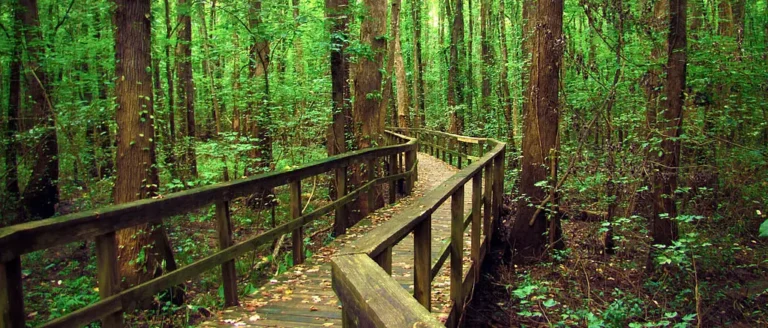
Locals and school groups love this place because it offers a “jungle experience” right in the center of the city. It is one of the few places in Mumbai where you can walk on a 1.8 km long brick-lined trail and feel like you are miles away from the traffic. It’s a favorite for birdwatchers and macro-photographers who want to find rare insects and colorful butterflies without leaving the suburbs.
3. History & Background of the Place
The story of Maharashtra Nature Park is truly inspiring. Back in the late 1970s, this 37-acre plot was nothing but a dumping ground for the city’s waste. It was Shanta Chatterji, a corporate lawyer and chairperson of WWF-India, who noticed migratory birds flocking to the nearby Mithi River creek and realized the potential of this land.
With the help of the MMRDA and the guidance of the world-famous ornithologist Dr. Salim Ali (who planted the first sapling here in 1983), the garbage dump was slowly transformed. Over 12 years of hard work by naturalists and school children turned a stinking landfill into a thriving forest. It was finally opened to the public in 1994 on World Earth Day.
4. What Makes This Place Special
What makes MNP stand out is the sheer density of life in such a small area.
- Biodiversity: It is home to over 580 species of plants, 125 species of birds, and 80 types of butterflies. You can even find reptiles like snakes and amphibians here.
- The “Web of Life” Theme: The entire park is designed to show how everything in nature is connected.
- Astral Garden: One of the most unique features is the Nakshatra Van or Astral Garden, which has trees corresponding to the 27 sun signs and 27 constellations of Indian astrology.
- Education Centre: The main building is an architectural marvel made of stone and wood, housing a library and an exhibition hall dedicated to environmental awareness.
5. How to Reach This Hidden Gem
Reaching the Maharashtra nature park location is very simple:
- By Local Train: The nearest station is Sion on the Central Line or Mahim on the Western Line. From Mahim station, it is a 15-minute walk or a short rickshaw ride toward the Sion-Bandra Link Road. From Sion station, it’s a quick 5-minute auto ride.
- By Bus: Any bus going toward Dharavi Depot will drop you right outside the gate. Buses like 11, A-22, and 29 LTD are frequent.
- By Road: If you are driving from South Mumbai or the suburbs, head toward the Bandra-Kurla Complex. The park is located right on the main link road, opposite the bus depot.
- By Taxi / Auto: Just tell the driver “Dharavi Nature Park” or “Maharashtra Nature Park, opposite Dharavi Depot.”
6. Entry Fees, Timings & Permissions
- Entry Fee: It is very affordable. The fee is usually ₹20 for Indians and ₹100 for foreigners. Students often get a discount if they come in a school group.
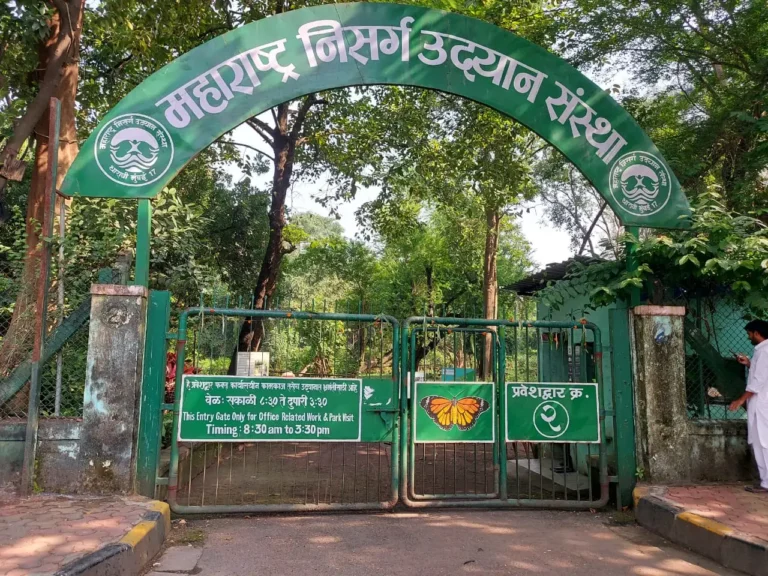
- Timings: The park is open from 8:30 AM to 3:30 PM. They close early to ensure the birds and animals are not disturbed during their evening roosting time.
- Permissions: For personal photography (using a mobile or basic camera), there is a nominal charge (around ₹100). However, professional shoots, pre-wedding photography, and commercial filming are strictly regulated and require prior permission and higher fees.
7. Best Time to Visit
- Monsoon (June to September): This is when the park is at its most beautiful. The trees are lush, and the “Butterfly Park” section comes alive with fluttering wings.
- Winter (October to March): This is the best time for birdwatching. Many migratory birds visit the nearby Mithi River creek during these months.
- Best Time of Day: Arrive as soon as it opens at 8:30 AM. It is much cooler, and the birds are most active in the early morning.
- Weather Tip: Carry an umbrella or raincoat during the monsoon, as there aren’t many shelters once you are deep on the trails.
8. Things to See at This Hidden Gem
- The Nature Trail: Walk the 1.8 km brick-lined path that loops through the entire wooded area.
- Butterfly Garden: A dedicated area with nectar-rich plants where you can spot species like the Blue Mormon (Maharashtra’s state butterfly).
- Medicinal Plant Section: See hundreds of Ayurvedic plants and learn about their healing properties.
- The Bird Observation Hide: A quiet spot near the wetland area where you can sit and watch kingfishers and egrets without being seen.
- Art Gallery: The Education Centre often hosts wildlife photography exhibitions and nature-themed art.
9. Things to Do Near This Hidden Gem
- Mahim Fort & Beach: Just a 10-minute drive away, you can visit the historic Mahim Fort and enjoy the sea breeze.
- Mahim Khau Galli: If you get hungry after your walk, head to the famous food lane near Mahim Dargah for some delicious local snacks and kebabs.
- Bandra Kurla Complex (BKC): Just across the road, you can explore some of Mumbai’s most modern cafes and fine-dining restaurants.
- St. Michael’s Church: One of the oldest churches in Mumbai, famous for its Wednesday Novenas, is very close by.
10. Local Experience & Atmosphere
Entering MNP feels like a glitch in the Matrix. One moment you are looking at the chaos of Dharavi, and the next, you are surrounded by the smell of wet earth and the sound of chirping sunbirds. The atmosphere is quiet and respectful. You will see naturalists guiding groups of wide-eyed children, photographers waiting patiently for a butterfly to land, and locals enjoying a peaceful morning stroll. It feels like a “silent zone” in a city that never stops talking.
11. Safety Risks & Things to Be Careful About
- Mosquitoes: Since it is a thick forest near a creek, mosquitoes can be quite a problem. Wear full-sleeved clothes.
- Isolated Trails: While safe, some of the deeper trails can be very lonely. It’s always better to walk with a friend or stay on the main brick paths.
- Slippery Paths: The brick trails can get mossy and slippery during the monsoon.
- Wildlife: While there are no large predators, there are snakes in the park. Stay on the paths and don’t venture into the thick bushes.
12. Safety Precautions
- General Safety: Do not feed the birds or animals. It is a “No Plastic Zone,” so avoid carrying disposable plastic bottles or packets.
- Solo Travelers & Foreigners: The park is very safe and well-guarded. However, because it is located near Dharavi, some people might feel overwhelmed by the surroundings outside the gate. Just take a rickshaw directly to the entrance for a hassle-free experience.
13. Things to Carry Before Visiting
- Water Bottle: Carry a reusable one. There are no shops inside the wooded areas.
- Insect Repellent: A tube of Odomos is your best friend here!
- Comfortable Shoes: Proper walking shoes or sneakers are a must. Avoid flip-flops or sandals.
- Binoculars: If you are into birdwatching, these will help you see the details on the trees.
- Cap/Hat: While the trees provide shade, the open areas near the education center can get sunny.
14. Travel Tips (Local Secrets)
- The Nursery Secret: There is a small nursery inside the park where they sell saplings and medicinal plants at very cheap rates. It’s a great place to buy a souvenir for your home garden.
- Ask for a Guide: If you are a group, ask the office for a naturalist guide. They know exactly where to find the “hidden” nests and rare spiders.
- Respect the Silence: This isn’t a place for loud picnics or music. The more silent you are, the more wildlife you will see.
- Check the Calendar: The park sometimes hosts organic farmers’ markets or butterfly workshops on weekends. Check their website before you go!
Forget the hassle and choose CABTAN—Mumbai’s most punctual and affordable cab service. Our trained drivers ensure a safe, reliable, and completely worry-free journey. Fill out the form below to book your ride now.